In the deep rooted debate considering sameness versus difference between genders, feminists often question whether an ethic of care can be chosen by women under the constraints of decision making in a patriarchal society. Can women choose to be nurturers? Are they structurally capable as an oppressed class of people to make an empowered decision to embrace what would otherwise be considered socially imposed feminine gender roles?
In modern queer culture, there is an active gender identity movement gaining visibility and solidarity for femme identified people. As it is with all genders, it can be difficult to define what "femme" is. Femme is however, in the least, an intentional reclamation of the feminine gender role, or of gender stereotyped behaviors assigned to female bodied people.
For nearly ten years now a regular national conference has been held to bring femme identified people together for networking, validation and community building. The Femme Collective's mission for the conference, ,offers a basic impression of how self identified femmes identify themselves to the world at large-
We understand that being femme is more complex than just being a queer person who is feminine; it is part of our how we interact with and shape our world as queer academics,activists, artists, homemakers, parents, professionals, students, teachers, etc. Our conferences seek to explore, discuss, dissect and support Queer Femme as a transgressive, gender queer, stand-alone and empowered identity..
In 2006, the SF Bay Times talked with film maker Elizabeth Stark about her film FtF:Female to Femme http://www.sfbaytimes.com/index.php?sec=article&article_id=5213. In the article, Stark draws particular attention to the fact that people who choose to embrace femme identities do so at a strong social cost, further emphasizing that these people are actively choosing their genders in spite of their oppression. [the concept of] 'women' is a ghetto whose boundaries are policed..You can be killed for attempting to move in and out of that ghetto-and you can be killed for staying put. I'd like to build a coalition whose goal was to tear down the walls of that ghetto.
I think many of the feminists like Catherine MacKinnon who have long argued that women can not reclaim femininity from a place of empowerment may be refreshed to see this new generation of a subversive feminine gender that is seeking to deconstruct female gender roles and rebuild them as something self created.
Funny story...when a teenage girl has sex outside of wedlock, many in our society consider her a slut. But when a guy has sex, even with multiple partners out of wedlock, he is applauded. Similarly, when a girl gets pregnant out of wedlock, our society thinks of her as a slut. But, her baby's father does not have to carry around any shame, and his life is not affected much. Meanwhile, she physically carries around her growing "shame" for all to see and discuss for nine months. And often times, not only are these girls shunned, but they are denied a helping hand in the upbringing of the child by the father, the public, and the law.
Seven hundred fifty thousand teen girls get pregnant every year and these young moms have to grow up quickly, change the course of their lives, and live solely around the needs of their babies. Many young moms will drop out of high school, and statistically less than 1/3 of all teenage moms that have babies before the age of 18 finish high school. This makes it nearly impossible for young moms to obtain higher education, affecting their chances at of employment and social class. To make things worse, less than 1/3 of teen moms receive any form of child support, and almost half of all teen moms end up on welfare.
This is not a funny story. This is another case of our society's double standard - attacking women for activities that are considered normal and/or commended when a man engages in them. This standard greatly affects the life of the mother (in the form of depression, poverty, and suicide), and in turn negatively affects the life of her child. It also affects our priorities as a society, and instead of helping these mothers with social programs and/or attempting to effectively prevent teenage pregnancy, we choose to blame the teen mothers for their actions.
Although it is very difficult to change people's perspectives through passing laws, I believe this is one area in which passing laws to benefit teen moms (and potential teen moms) and their children would be very effective in eliminating a lot of the stress that only a teen mom will face.
Sexual education must be a top priority, and it must have the aim of educating young people about BOTH abstinence AND contraception! In addition, sex education should relay how easy it is to get pregnant and the grave consequences that a teen parent will face. Another social service beyond welfare that should be a priority is making sure low-income teen moms can get childcare so that they can finish school and/or make money. Stricter laws should also be in place that force the fathers to be involved in the child's life, whether or not they wanted the child. Don't do the crime if you can't do the time!
Our society can't pass this problem off any longer as simply the fault of a teenage mother (hello! there are always two people that contribute to a pregnancy). It is our duty as a society to look out for the young people and to educate them about the dangers of teen pregnancy.
Below are some resources that can assist teens in getting help.
Planned Parenthood 1-800-230-PLAN - 24 hour hotline will direct you to the clinic nearest to you.
National Office of Post Abortion Trauma 1-800-593-2273
National Abortion Federation 1-800-772-9100
National Adoption Center 1-800-862-3678 - dedicated to expanding adoption opportunities in the U.S.
Reality shows are promoting a terrible image of women. With shows like “Real Chance of Love,” “Flavor of Love,” “For the Love of Ray J,” and most recently, “Rock of Love,” it seems there is no hope for the advancement of women on television.
All of these shows are based on one premise, having a bunch of women compete for the “love” of a male bachelor--by any means possible. As one might suspect, the shows are filled with dramatic love triangles and vicious cat fights that only leave viewer asking for more. In fact, these shows proved to be so popular that they were all extended multiple seasons, some of which are still being rerun on VH1.
I find it appalling that our viewing audiences, many of whom are women; actually promote the furtherance of such shows by allowing them to get such high ratings. In fact, “Flavor of Love 2,” gave the VH1 network a record breaking 3.3 million viewers for its premier.
What is so amusing about these shows and what does this mean for the roll of women on television in the future?
If the 3.3 million viewers of “Flavor of Love 2” are any indication of amusement, or at least interest, it seems that these viewers are amused at the destruction of the image of women on network television. Take a look at some of the audition tapes for the women that made it on the show.
The casting directors only look to cast people who we are willing to watch, which according to this video are “hoes” and girls that like to fight.
With the support that we are providing for these shows, it’s no wonder that it has become more and more common to have women depicted in this derogatory fashion on television. The only way we can bring about a change is to take a stern stance against these types of shows. I call for all feminists from around the nation to join together to boycott these shows. If we continue to allow ourselves to get sucked into supporting this type of programming, the image of women on television may never recover.
After the birth of my first baby, I subscribed to two parenting magazines, believing that both will bring valuable perspective to my ongoing education on being a mother. One of them was Mothering, an earth-mama style publication that gave my maternal instincts a lot of validation, while educating me on the hottest controversies in childrearing: vaccines, co-sleeping, attachment parenting, etc. The other, Working Mother, is an invaluable publication about work-life balance, especially if one needs to know which workplaces have the kinder, gentler policies allowing for mothers to continue working or to return to the workforce. Coming from different angles, both of these magazines helped keeping my sanity in those early, frantic years.
On one issue, however, the two publications disagreed sharply. Mothering advocated breastfeeding zealously, which was my personal position at that time, thus it was easy for me to identify with their point of view. Working Mother, on the other hand, published a provocative article about a bottle-feeding mother, who never even considered breastfeeding and was a self-professed advocate of bottle-feeding as the true feminist choice. Consequently, Working Mother received a slew of letters to the Editor, deriding their choice to give bottle-feeding a “forum,” even in one article. I almost wrote in myself, because I thought there was really no need to advocate for bottle-feeding, a practice already sufficiently widespread in the U.S. And while breastfeeding is becoming the dogma in medical circles, there is still a long way ahead until it becomes (again) the norm. As this article about an Ohio case demonstrates, smart lawyering can achieve a state Supreme Court decision stating that a woman fired for "unauthorized lactation breaks" was not discriminated against because of her gender or pregnancy-related condition.
While I was thinking about what I would write to the Editor of Working Mother, I reflected on my own prejudices against bottle-feeding.
Like my fellow blogger admits here, some feminists view stay-at-home mothers as the losers of a zero-sum game. The same is true with women who are committed to breastfeed despite its inconveniences and pains (and also on demand of the baby, until such time as both of the parties involved agree that it’s best to stop): they often view bottle-feeding mothers with a dash of pity for losing out on creating such a special bond with their child. But there is no need to view breastfeeding as an “either/or” proposition and, certainly, there is no need to get our feathers fluffed over other women's informed decisions.
I came to advocate for breastfeeding to only those who have yet to make their decision, but once that informed decision is made, it is quite futile to try to convince women to switch to the "other side." Not only futile, it is likely anti-feminist to harangue one another because of our mothering choices. Women are absolutely capable of making these choices for themselves, and to educate themselves on the issues before making a decision. We, feminists, have to acknowledge this capability of all women, and avoid putting pressure on them to conform to any set protocol. It is also unnecessary to attach emotional significance to another mother’s rational choice in childrearing. Some mothers may want to create bonds with their babies in other ways, and if they are ingenuous enough to do so, the better for all of us. Women who experiment with different childrearing ideas are the ones who can share these ideas later with the rest of us.
In the end, I exclusively breastfed my first baby until she was 2.5 years old. With the second one, I was less anxious to be the perfect earth-mama, and I chose to supplement my dwindling supply with formula. That choice, in the end, has benefited us both, and opened my mind about the considerable need for flexibility in parenting. I ended up embracing my femininity, and my instincts as a mother, as parts of the complex that make me unique, and a more efficient participant in today’s co-ed workforce. But I also learned to judge other mothers less based their choices in childrearing, because there are as many flavors of it as are mothers.
Even in elementary school, I was very aware of the discrimination that stopped women from preventing or ending their pregnancies. The abortion battles, the refusal to subsidize contraception or provide adequate sex education- these were (and are) all popular news topics. However, it was not until very recently that I became aware of the extent of the discrimination that faces women once they become pregnant.
Of course, I had heard bits and pieces, here and there. I knew that in the past women were fired for becoming pregnant and forced to sign contracts agreeing not to become pregnant in order to obtain loans. I knew that our society failed to provide poor, mostly non-white women with the resources to care for their fetuses and then stigmatized them when their babies were born with health problems.
However, I did not realize that pregnant women were actually thrown into jail because they struggled with addiction, refused cesareans, or simply didn’t get enough bed rest. I did not realize that pregnant women were forcibly dragged to the hospital, strapped down, and cut open.
Even if these measures genuinely improved maternal and fetal health, they would be appalling. The irony, however, is that these assaults on women's bodily integrity often do little to improve maternal and fetal health. Frequently, they worsen it.
While drug use is certainly not recommended during pregnancy, the negative effects are generally much less significant and much less certain than courts assume.
The infamous crack baby epidemic is a case in point. During the height of the crack baby hysteria, one judge compared smoking crack during pregnancy to "tak[ing] a pistol and put[ting] it in your mouth and blow[ing] your head off." (Which leads me to wonder- does he think pregnant women who attempt suicide should be thrown in jail, too?)
However, a New York Times article "The Epidemic That Wasn't" reveals that maternal crack cocaine use is comparable to maternal tobacco use, and quotes a federal maternal cocaine use researcher as saying “Are there differences [between cocaine-exposed babies and other babies]? Yes. Are they reliable and persistent? Yes. Are they big? No.”
Forcing women to have cesareans or hospital births or jailing women for refusing to do so is even more ridiculous, given that the rise in c-sections appears to have contributed to the recentrise in maternal mortality in the U.S.
Throwing pregnant women in prison for allegedly failing to care for their babies betrays not only a lack of respect for their bodily integrity and a failure to pay attention to the medical literature, but a profound lack of common sense.
Care for pregnant prisoners is frequently atrocious. Women are often denied care even when they show visible signs of distress, such as leaking amniotic fluid or bleeding from the vagina for days after being repeatedly punched in the stomach by fellow prisoners. Women who make it to labor sometimes end up giving birth in their cells because guards refuse to take them to the hospital until too late. Although activist groups have recently succeeded in reducing the shackling of non-violent women prisoners in the hospital as they give birth, shackles are stillroutinelyused as guards transport women to and from the hospital in labor.
The punishment of pregnant women for allegedly not caring for their babies involves not just sexist ideas about women’s right to bodily integrity, but also sexist (and classist and racist) ideas about intelligence. The probably white, probably male, almost certainly upper class doctors and judges are assumed to be correct about what is healthiest for the mother and baby. The frequently non-white, frequently poor, always female mother is assumed to be wrong. (Of course, if it turns out the doctors and judges are wrong, the blame is quickly shifted to the women- see Miriam Pérez’s excellent article on so-called “voluntary” c-sections.)
I’ve always loved Marilyn Frye's birdcage metaphor and it’s very relevant in the context of reproductive rights. Fry explains that if you look at a single wire of a bird cage you cannot understand why the bird cannot just fly around it. It’s only when you step back and look at all the wires together that you see how they effectively trap the bird.
Restrictions on birth control and abortion must be understood in combination with discrimination, and both of them must also be understood in combination with rape, homophobia, pressure to have children, and problematic adoption practices. On their own, these things are painful enough, but together they combine to form a situation in which it’s difficult for women to avoid pregnancy and even more difficult for them to maintain their bodily integrity once they are pregnant.
As an open-minded fan of rock music - especially unconventional rock - "glam rock" holds a special place for me, in part because of the genre's role in pushing conventional gender boundaries in pop culture. Wikipedia characterizes glam rock as music "which was performed by singers and musicians who wore outrageous clothes, makeup and hairstyles, particularly platform-soled boots and glitter." According to Allmusic, the actual music was straightforward and catchy, but its "innocent-sounding influences were belied by the delivery, which was all campy, glitzy showmanship and sexuality."
Allmusic argues that one of the primary reasons why glam rock remained a British phenomenon and never caught on in the United States is because "glam artists intentionally played around with gender conventions, dressing themselves up in outlandish, androgynous costumes and makeup." Most, if not all, of the early icons of glam rock flirted with this "gender-bending" imagery. Not only has this particular aspect of glam influenced the imagery of subsequent rock sub-genres, but it also illustrates the progressive capacity of pop culture.
One can likely trace the roots of glam rock to the 1960s experimental rock band the Velvet Underground (“VU”). Although VU predated the glam rock movement, their lyrics often dealt with sexually-provocative themes, thus setting the stage for glam rock's sexually-provocative visuals. The VU song "Sister Ray" concerns a "transvestite smack dealer” and a group of drag queens who shoot up heroin and have an orgy with a group of sailors when the police arrive.
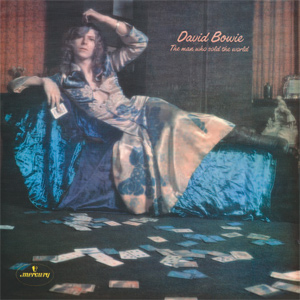
According to Allmusic and Wikipedia, glam rock effectively started in 1971 with the band T. Rex, after founder Marc Bolan added two spots of glitter under his eyes for a performance on the U.K. show Tops of the Pops. Though VU and Bolan opened the door for experimentation with gender conventions, other glam rock icons would push that door wide open. For example, the cover art for David Bowie's album, The Man Who Sold the World, features Bowie in a "man's dress." He used this dress for his first tour of the United States, as well as for interviews. As his Martian alter-ego Ziggy Stardust, Bowie presented his sexual identity quite literally outside of human convention.
Vincent Damon Furnier toyed with androgyny on a very fundamental level through the name of his onstage persona - Alice Cooper. He also experimented with gender identity issues musically, especially on the song "Is It My Body?", "a witty and clever send of macho insecurity," in which the narrator inquires whether a suitor's interest is based solely on physical attraction. One band, the New York Dolls, had trouble securing a record label, in part, because of their cross-dressing habits. More so than any of the aforementioned musicians, the Dolls’ image was inextricably linked to their garish onstage outfits.
So what is the actual significance of glam rockers' experimentation with gender norms? On the one hand, one could view these actions as simply provocation in the name of rock. Alice Cooper and the New York Dolls in particular adhered to a “shock rock” philosophy – music calculated for maximum shock value. The underlying premise for this theory is that seeing adult men (most all of the early glam icons were men) transgressing gender roles and stereotypes would shock the average person. From the musician’s perspective, notoriety can prove just as useful as musical ability.
On the other hand, regardless of their actual intentions, glam rockers undeniably pushed the boundaries of rock music and left an indelible stamp on pop culture. First, they eschewed gender conventions and helped usher a new paradigm for the male rock star – the drug addled, sleazy, androgynous sex symbol. Second, glam rock helped legitimize androgynous imagery for subsequent rock sub-genres - including goth and punk - as well as for other musicians as diverse as Prince and Lady Gaga. Glam rock’s influence is also apparent in the world of cinema (the Rocky Horror Picture Show) and the world of theater (Hedwig and the Angry Inch).
In the end, the early glam icons probably were not looking for meaningful social change. However, the legacy of glam rock undeniably stems, in part, from its audacity to confront pop culture with basic gender conventions.
Below are a few videos that demonstrate the sonic range of glam rock, as well as how glam artists toyed with gender conventions.